
How Branch County Deed Records Transfer Interests
The Branch County Register of Deeds accepts deeds, mortgages, releases, liens, plats, and related instruments into the official record. Deed type matters, because each instrument carries a different legal promise.
| Deed Type | What It Does | Common Use |
|---|---|---|
| Warranty deed | Conveys an interest with stated covenants. | Arm's-length transfers |
| Quitclaim deed | Conveys whatever interest the grantor holds without warranty. | Family transfers and title cleanup |
| Trustee or fiduciary deed | Transfers through an authorized representative. | Trust or estate administration |
| Foreclosure-related deed | Records a transfer arising from a statutory process. | Foreclosure history |
| Tax-related conveyance | Documents a delinquent-tax transfer. | Tax-foreclosed history |
A deed conveys an interest, while a mortgage or lien usually burdens it. Read later releases, assignments, and corrections alongside the conveyance.
Walk Branch County's Grantor-Grantee Index
Branch County's one-time search notice states that name searching reaches 1974 and liber/page or document-number searching reaches 1949, with gaps. Always check the notes field.
- Find the current owner's acquiring deed with that owner as grantee.
- Read the grantor, recording reference, and legal description.
- Search that grantor as an earlier grantee and match the land.
- At the cutoff, continue through deed books, the counter, or archives.
- Grantor
- The conveying party.
- Grantee
- The receiving party.
- Chain of title
- The ordered sequence of instruments for the same land.
- Liber/page vs instrument number
- Two ways Branch County references a recorded document.
Match Legal Descriptions and Branch Plats
A name match alone proves nothing. Two instruments with identical parties can concern completely different parcels of land. Compare the municipality, the full legal description, lot and block, acreage, and any subdivision name before linking deeds. Branch County's Register of Deeds resources include scanned plats anchored to names like Waterman's Addition, Long Branch, Coldwater Village 1, and Union City. Those plat images help. They translate a deed's lot-and-block language into recorded geography.
Rural parcels often rely on metes-and-bounds calls instead, and the whole description must be followed rather than a street address, since road names, rural routes, and postal labels change while the recorded land description endures. Interpreting a boundary dispute is different work. That belongs to a licensed surveyor and legal counsel.
Check Notes, Releases, and Associated Documents
Branch County warns that associated documents may not connect in the online system. The notes field is the workaround. Check it every time. Once a deed is located, search both party names around the recording date. Look for mortgages, discharges, assignments, corrective deeds, and affidavits. A later document number can matter even when the portal shows no clickable link.
An index result is not the deed itself. Read the image or order the recorded copy. Only then trust the document type, parties, description, or conditions. If no image appears, give the Register the exact index reference. Ask for the proper copy channel.
Note: Branch County's online notice acknowledges gaps, so a missing link is not proof that no related instrument was recorded.
The 1972 Courthouse Fire as a Preservation Check
Fire shaped Branch County's record keeping. A December 5, 1972 blaze gutted the courthouse's second floor and damaged the levels below. County offices worked from temporary quarters for nearly three years while a replacement courthouse rose. That history justifies a custody question. It never proves that a particular deed series burned.
Ask the Register whether the relevant index, deed book, plat, or court record was moved, microfilmed, reconstructed, or reindexed. The Archives of Michigan county guides catalog Branch County archival holdings and suggest the next channel when older deed records sit offline. Deep historic chains benefit most.
Branch County's Property Fraud Alert
Branch County offers monitoring through its Property Fraud Alert enrollment page. Enrollment covers chosen names and property recordings. An alert can prompt a timely check when an unexpected deed or lien is indexed. It stops nothing. Enrollment does not rule on validity either.
When a notice arrives, save its document reference and verify it with the Register through published contact details. Never trust contact details supplied only inside the message. The official recorder page is the safer starting point.
One-Time Search, Laredo, and Office Access
Occasional Branch County searchers can enter through the Fidlar Tapestry gateway at landrecords.net, which offers pay-per-search access to deed records. The page is just an entry point.
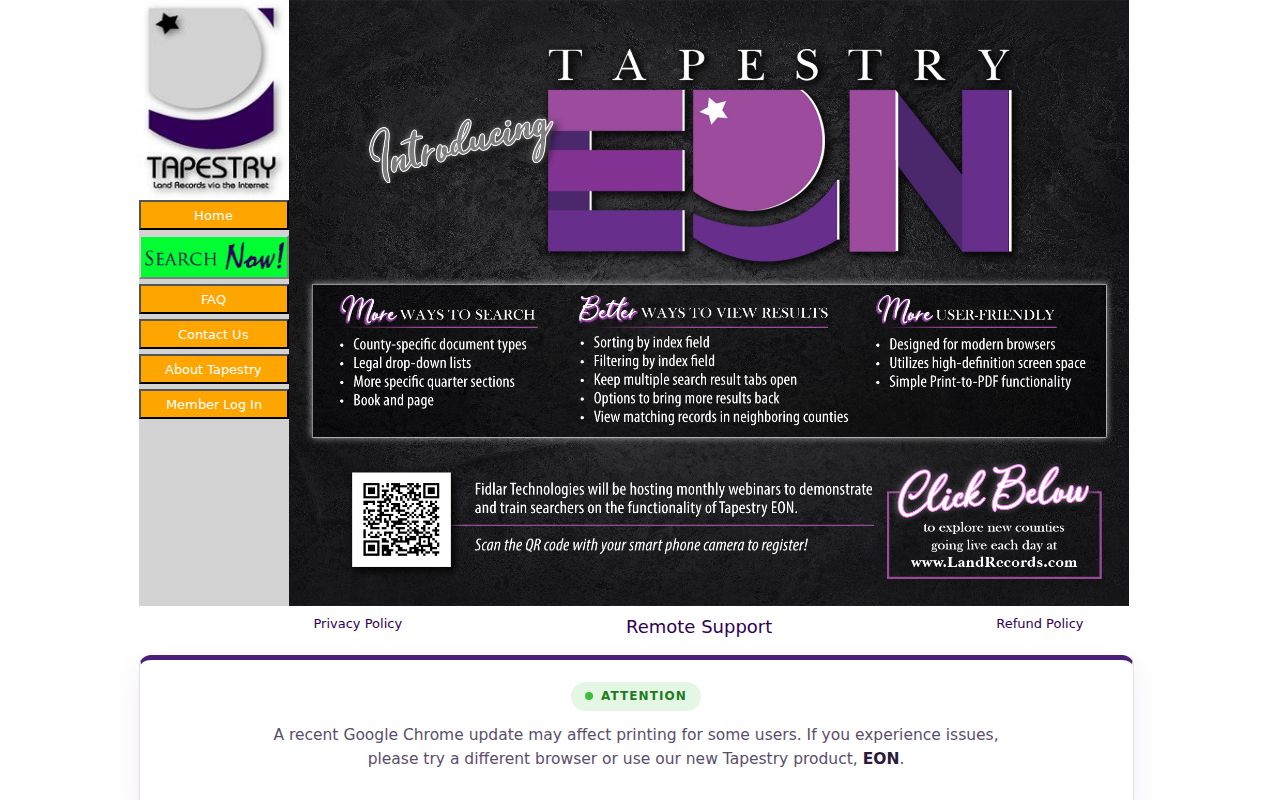
That gateway is access, not proof that every image is online. Repeat users can review Laredo remote-access instructions. At the office, searchers can ask about missing images, older deed books, certified copies, and accepted payment methods. Confirm the fee before ordering.
Recording Requirements Add Transfer Context
The county's recording checklist spells out acknowledgments, grantee addresses, and transfer value. It also covers Michigan transfer tax and document margins. Those rules explain extra details. A deed often carries facts the index omits. Transfer value can support sale-history research. But price, consideration, assessed value, and market value are not interchangeable figures.
Branch County also accepts electronic recording through listed vendors. E-recording is only a submission method. It changes nothing about verifying recording details in the official deed records index.
Request a Branch County Deed Copy
Occasional users enter through Fidlar Tapestry. Subscribers use Laredo remote access instead. For missing images or older deed books, visit or call the Register at 23 East Pearl Street in Coldwater. Supply party names, an approximate date, and the document number or liber/page, then specify plain or certified copy and confirm the current fee.
Recorded, not guaranteed. Branch County deed records show accepted instruments; they do not resolve every unrecorded interest, boundary issue, lien priority, or defect and are not a title opinion.
Extend Branch Deed Research Beyond the Web
The online name index only reaches so far. Beyond its cutoff, a deed search in Branch County shifts to older tools. Deed books, plat maps, and a known liber and page reference can carry the chain back. They can take it further than any index. Staff at the Register of Deeds can also help you work through the gaps. The Branch District Library's 71-item directory collection is another asset. It helps with reconciling historic names and street addresses. Its 1882 directory covers Coldwater, Bronson, Quincy, and Union City. That helps when an older label no longer matches the modern municipality. The Archives of Michigan Branch County guide points to still older governmental series worth checking. Remember that these materials supply clues. The recorded deed remains the land instrument. So bring the resolved name, approximate year, legal description, and book reference back to the Register.
Historic tax rolls and court journals can corroborate names or dates. That matters when a conveyance grew out of an estate, foreclosure, or similar proceeding. Treat those records as context only. Locate the recorded deed itself before adding any party to the chain of title. Note every source date and reference so another searcher can reproduce the sequence.